
Why Does Honey Crystallize? Understanding a Natural Process

Key Takeaways
Crystallization is a natural physical change, not a sign of spoilage.
Honey is a supersaturated sugar solution, and glucose is less soluble than fructose — so glucose is usually the first to settle out as crystals.
Water content, storage temperature, and the honey's floral source all influence how fast it crystallizes.
Raw, minimally filtered honey tends to crystallize faster because it contains more natural particles for crystals to form around.
A gentle warm-water bath can return crystallized honey to a liquid state without damaging its quality.
What Is Honey Crystallization?
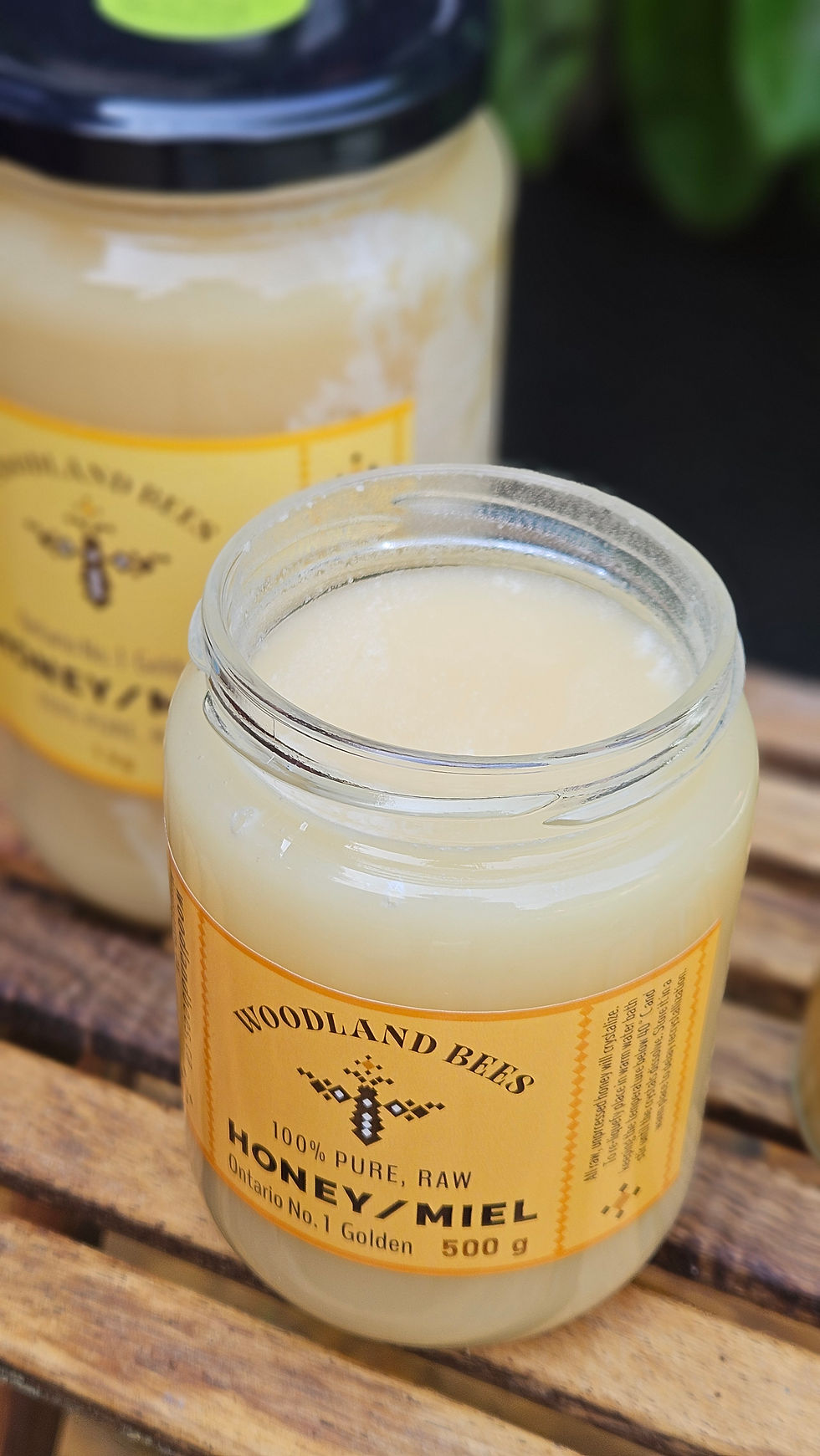
Honey is made up mostly of two sugars — glucose and fructose — along with a relatively small amount of water. Because there's more sugar in the mix than the water can permanently hold in solution, honey exists in what's called a supersaturated state. Over time, the glucose molecules separate out of that solution and form solid crystals. This changes the honey's texture from smooth and pourable to thick, creamy, or grainy, but it doesn't change the honey itself in any way that affects safety.
Why Does It Happen?
Several factors work together to determine how quickly a jar of honey will crystallize:
Factor | Effect on Crystallization |
Higher glucose content | Speeds it up |
Higher fructose content | Slows it down |
Lower water content | Can make crystals form more easily |
Cool storage (around 10–15°C) | Tends to encourage crystallization |
Pollen, wax, or fine particles | Give crystals a place to start forming |
Heavy filtering | Can slow crystallization by removing those particles |
No single factor is responsible on its own — it's usually the combination of a honey's natural sugar ratio, its water content, and where it's stored that determines how it behaves.
Does Crystallized Honey Mean It's Gone Bad?
No. Crystallization is a physical change, not a biological one. Honey's low moisture content and natural acidity make it a genuinely inhospitable environment for the microorganisms that cause spoilage, which is part of why properly stored honey can last for a very long time. If your honey has simply turned thick, pale, or grainy, that's normal. Signs of actual spoilage — such as fermentation, an off smell, or visible mold - are a different matter and rare in honey that's been stored well.
Which Ontario Honeys Crystallize Fastest?
Floral source has a big influence on crystallization speed, because different nectar sources produce different ratios of glucose to fructose. Here's how some honey varieties commonly found in Ontario tend to behave:
Honey Variety | Typical Crystallization Tendency |
Clover | Often faster |
Canola/Rapeseed | Very fast — can crystallize within days to weeks |
Wildflower | Moderate, but variable depending on the season's blooms |
Basswood (Linden) | Moderate |
Buckwheat | Often slower |
Beekeepers in Ontario will often notice that canola honey, when present in the mix, sets up almost solid within a short time after extraction, while a lighter wildflower or basswood honey may stay liquid on the shelf for months.
How to Turn Crystallized Honey Back into Liquid
If you'd rather have your honey pourable again, gentle heat is the way to go:
Fill a bowl or pot with warm (not boiling) water.
Place the sealed jar of honey into the water.
Let it sit, replacing the water as it cools, until the crystals dissolve.
Stir gently if your container allows it.
Avoid the microwave — uneven heating can create hot spots that damage the honey's flavor and beneficial enzymes. A slow warm-water bath is gentler and gives you more control.
Is Crystallized Honey a Bad Thing?
Not at all. Many people actually prefer it. Crystallized honey spreads more neatly on toast, is easier to portion without dripping, and has a creamy texture some find more enjoyable than liquid honey. It works just as well in tea, baking, or cooking — it will simply melt back down once it's warmed.
Quick Comparison
Feature | Liquid Honey | Crystallized Honey |
Texture | Smooth, pourable | Thick, creamy, or grainy |
Appearance | Clear to translucent | Cloudy to opaque |
Spreadability | Can drip | Spreads cleanly |
Safety | Safe when stored properly | Safe when stored properly |
Best use | Drizzling, mixing into drinks | Spreading, baking |
Frequently Asked Questions
Is crystallized honey safe to eat? Yes. Crystallization changes texture, not safety.
Why does raw honey crystallize faster than processed honey? Raw honey retains more natural pollen and fine particles, which give glucose crystals a starting point.
Does refrigerating honey make it crystallize faster? Yes — cool temperatures speed up the process, so honey is best stored at room temperature.
Does crystallization affect the taste or nutritional value? No. The flavor stays close to the same, and the nutritional content doesn't change — only the texture does.
How should I store honey to keep it liquid longer? Keep it tightly sealed, at room temperature, away from cool spots like a fridge or an unheated pantry.
Have questions about the honey from our hives, or curious which varieties we currently have in stock? Get in touch — we're always happy to talk bees and honey.
Comments